Winter Utility Locating & GPR Scanning | On The Mark Locators
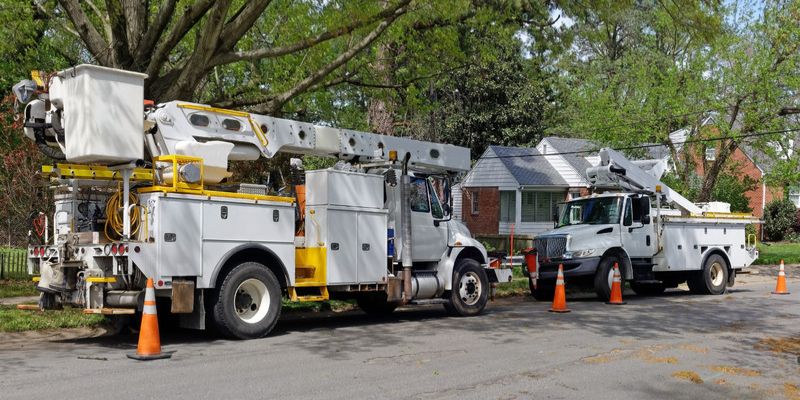
Cold weather can make construction projects more challenging, especially when excavation and underground infrastructure work must continue during the winter months. Freezing temperatures, hardened soil, snow-covered surfaces, and changing ground conditions can create additional obstacles for contractors, engineers, and utility professionals. While winter weather may slow down certain construction activities, essential infrastructure projects, emergency repairs, and scheduled maintenance often cannot wait for warmer conditions.
One of the biggest concerns during winter excavation is the possibility of damaging underground utilities. Water lines, gas pipelines, electrical cables, communication networks, and drainage systems can be hidden beneath frozen ground, making them difficult to identify without proper investigation. A mistake during excavation can result in expensive repairs, dangerous working conditions, unexpected delays, and interruptions to essential services.
This makes professional underground utility detection an important part of winter construction planning.
Modern technologies such as electromagnetic locating and Ground Penetrating Radar (GPR) help construction teams understand underground conditions before disturbing the ground. Working with an experienced utility line locator and investing in professional private utility locating services can help reduce uncertainty and support safer excavation decisions.
At On The Mark Locators, we provide advanced underground utility locating solutions for industrial, commercial, residential, municipal, and infrastructure projects. Our multi-technology approach combines GPR, electromagnetic passive locating, and electromagnetic induction locating to help clients identify underground utilities and plan their projects with greater confidence.
Let's explore why winter construction requires additional underground investigation and how professional utility locating can help keep projects moving safely.
1. Understanding the Challenges of Winter Excavation
Winter conditions can significantly change the way construction teams approach excavation work. When temperatures remain below freezing, moisture in the soil can turn into ice, causing the ground surface to become harder and more difficult to penetrate.
Traditional excavation equipment may require additional effort to break through frozen soil. This can increase equipment wear, create additional vibration, and make controlled digging more challenging.
Other common winter excavation challenges include:
Frozen soil that makes digging more difficult.
Snow covering underground utility access points and surface indicators.
Reduced visibility during snow, fog, and shorter daylight hours.
Ice accumulation around excavation areas.
Changes in soil stability during freezing and thawing cycles.
Increased difficulty maintaining safe working conditions.
These challenges make preparation especially important. Before excavation begins, contractors should understand the existing underground infrastructure and evaluate the site conditions.
A professional utility investigation provides valuable information that helps teams identify potential obstacles before construction equipment reaches the ground.
2. Why Underground Utility Detection Matters in Cold Weather
Underground infrastructure does not become less important when winter arrives. In fact, many utilities become even more critical during colder months because communities depend on reliable heating, electricity, water, and communication services.
An accidental strike involving an underground utility can create serious consequences.
For example, damaging a buried water line during freezing temperatures can lead to flooding, ice formation, and additional property damage. Striking an electrical cable may create severe electrical hazards, while damaging a gas pipeline can result in dangerous leaks.
Cold-weather construction also introduces additional complications when repairs are necessary. Frozen soil, difficult site access, and unfavorable weather conditions can make restoration work more complicated.
Professional underground utility detection helps contractors identify potential underground conflicts before excavation begins.
It can support:
Safer excavation planning.
Better awareness of buried infrastructure.
Reduced risk of accidental utility strikes.
Improved coordination between project teams.
Fewer unexpected construction interruptions.
More informed decisions about excavation locations.
The goal is not simply to find underground lines. It is to provide reliable information that helps construction professionals understand what may be present beneath the work area.
3. How a Utility Line Locator Helps Identify Buried Infrastructure
A professional utility line locator uses specialized equipment and field expertise to identify and trace underground utility infrastructure.
Electromagnetic locating is one of the most commonly used approaches for identifying conductive underground utilities. Depending on the site conditions, technicians may use active or passive locating techniques to investigate potential utility routes.
Active locating generally involves applying a signal to an accessible utility through a transmitter. A receiver then detects the signal, helping the technician trace the underground line.
Passive locating can help identify naturally occurring or existing electromagnetic signals associated with certain underground infrastructure.
These methods can help locate:
Underground electrical lines.
Metallic water and gas infrastructure.
Communication cables.
Conductive utility conduits.
Other detectable underground installations.
During winter, snow and frozen ground can make surface indicators harder to recognize. A structured locating process helps technicians investigate the available access points and underground utility routes.
However, electromagnetic locating has limitations. Non-metallic pipes, disconnected lines, and utilities without accessible connection points may not be detectable through conventional methods alone.
This is why using multiple locating technologies is important when investigating complex construction sites.
4. The Importance of GPR Scanning for Winter Construction Projects
Ground Penetrating Radar (GPR) is a valuable technology for investigating underground conditions without immediately disturbing the ground.
GPR equipment sends electromagnetic energy into the subsurface and records reflected signals from buried objects and changes in underground materials.
These signals are interpreted by trained technicians to identify potential underground features.
Depending on soil conditions, target characteristics, depth, and equipment settings, gpr scanning may help identify:
Non-metallic underground pipes.
Buried drainage infrastructure.
Stormwater and sewer systems.
Fiber-optic utility routes.
Underground structures and objects.
Voids and other subsurface anomalies.
Why Is GPR Useful During Winter?
Winter construction sites can contain additional uncertainty because snow, ice, and frozen surface conditions may conceal visible utility indicators.
GPR provides another method of investigating the subsurface when traditional locating methods do not provide sufficient information.
However, GPR performance depends on ground conditions. Soil moisture, clay content, frozen layers, depth, and the characteristics of the buried target can influence the quality of the results.
For this reason, GPR should be performed and interpreted by experienced professionals who understand the technology's capabilities and limitations.
At On The Mark Locators, GPR utility locating is combined with other detection methods to help identify underground utilities that may not be easily traced using electromagnetic equipment alone.
5. Why Combining GPR and Electromagnetic Locating Produces Better Information
One of the biggest mistakes construction teams can make is relying on a single underground detection method for every project.
Different underground utilities have different materials, depths, configurations, and accessibility conditions. A locating method that works well for one utility may not provide useful information about another.
For example, electromagnetic locating can help trace conductive utility lines, while GPR can investigate potential non-metallic infrastructure and underground anomalies.
Combining multiple methods provides a more comprehensive investigation.
A typical underground utility locating process may involve:
Step 1: Site Walk and Visual Inspection
Technicians review the project area and identify visible features such as utility boxes, meters, valves, manholes, drainage structures, and other indicators.
Step 2: Locate Known Utilities
Electromagnetic equipment is used to trace accessible and identifiable utility lines within the project scope.
Step 3: Investigate Unknown Utilities
Passive locating and electromagnetic induction techniques help investigate additional underground features.
Step 4: Perform GPR Scanning
Ground Penetrating Radar is used to investigate potential underground anomalies and infrastructure that may not be identified through conventional locating.
Step 5: Review and Document Findings
The findings are reviewed and documented to provide project stakeholders with useful underground information.
This multi-technology approach is especially valuable for complicated construction sites where incomplete utility records or undocumented infrastructure may create additional risks.
6. How Private Utility Locating Services Help During Winter Projects
Many contractors contact 811 before excavation, as required by applicable state and local procedures. However, public utility locating programs generally cover participating utility owners' infrastructure and do not necessarily identify every privately owned underground installation.
This can create challenges on commercial properties, industrial campuses, residential developments, and other privately managed sites.
Professional private utility locating services help investigate underground infrastructure that may not be included in public utility marking programs.
These services can help identify:
Private electrical distribution lines.
Underground water and sewer connections.
Communication infrastructure.
Storm drainage systems.
Industrial process piping.
Abandoned or undocumented utility installations.
During winter, locating private utilities becomes especially important when snow or frozen surfaces make existing utility access points more difficult to identify.
For example, a contractor preparing to install new drainage infrastructure on a commercial property may encounter underground electrical or communication lines that are not included in the available public utility records.
Private locating provides additional investigation that can help identify these potential conflicts before excavation.
On The Mark Locators provides professional private utility locating services for engineers, utility providers, contractors, property owners, developers, and government agencies throughout Maryland, Pennsylvania, Delaware, New Jersey, Washington, DC, and Virginia.
7. Planning Safer Excavation Around Frozen Ground
Identifying underground utilities is only one part of winter excavation preparation. Construction teams must also evaluate the condition of the ground and select appropriate excavation procedures.
Frozen soil can create a misleading impression of stability. However, ground conditions may change during thawing, precipitation, or temperature fluctuations.
Contractors should evaluate:
Soil composition and moisture conditions.
Expected excavation depth.
Groundwater and surface water accumulation.
Nearby structures and underground infrastructure.
Equipment access and operating space.
Appropriate protective systems for trenches.
Excavation safety should never be based solely on the assumption that frozen ground is stable.
OSHA requires employers to determine the estimated location of underground installations before opening an excavation and to contact utility owners or operators to establish their locations. Excavation protection, inspections, and other applicable safety requirements must also be followed.
Combining utility locating with proper site assessments helps construction teams make better decisions before work begins.
8. The Role of Vacuum and Hydro Excavation in Cold-Weather Work
When underground utilities have been identified, contractors may need to expose specific sections of infrastructure to confirm their exact location and depth.
Vacuum excavation and hydro excavation are two methods used for controlled soil removal.
Hydro excavation uses pressurized water to loosen soil, while a vacuum system removes the resulting soil-and-water mixture into a collection tank. Some specialized systems use heated water to help loosen frozen ground.
Vacuum excavation can also use air-based methods, depending on the equipment and application.
Benefits of Hydro Excavation in Winter
When appropriate for the site and utility conditions, hydro excavation can provide several advantages:
Helps loosen frozen or compacted soil.
Allows controlled exposure of selected underground utilities.
Reduces the need for direct mechanical contact with buried infrastructure.
Can limit the size of an excavation.
Helps remove excavated material from the immediate work area.
Supports utility verification and potholing activities.
However, hydro excavation is not automatically suitable for every winter project. Water management, freezing conditions, soil characteristics, equipment limitations, and the utility owner's requirements must all be considered.
It is also important to distinguish utility locating from excavation. GPR and electromagnetic locating identify potential underground infrastructure, while hydro excavation can physically expose selected targets for verification.
These methods work best as complementary parts of a properly planned construction process.
9. Reducing Project Delays and Unexpected Construction Costs
Winter construction schedules are often affected by weather-related interruptions. When an unexpected underground utility is discovered, the project may face additional delays while contractors investigate the issue and determine how to proceed.
These delays can affect labor availability, equipment scheduling, subcontractor coordination, and overall project costs.
Professional utility detection before excavation can help reduce some of this uncertainty.
For example, a contractor planning a trench installation near an existing commercial building may discover several undocumented utility lines during construction. If these lines are not identified early, the project may require redesign, additional excavation, or coordination with utility owners.
A proper underground investigation can provide useful information before the construction schedule is finalized.
Potential advantages include:
Better project preparation.
Fewer unexpected underground conflicts.
More informed excavation decisions.
Improved contractor coordination.
Reduced potential for expensive utility repairs.
Better planning for future maintenance.
Although utility locating cannot eliminate every construction risk, it can help project teams identify potential problems earlier, when changes are generally easier to manage.
10. Why Utility Mapping and Documentation Matter for Winter Projects
Utility locating information becomes even more useful when findings are properly documented.
Construction professionals need more than verbal descriptions or approximate underground locations. They need understandable information that can support engineering, excavation, maintenance, and future infrastructure planning.
Professional utility mapping can document identified utility routes, field markings, relevant observations, and available location information.
Depending on project requirements, deliverables may include:
GPS-based utility location information.
Underground utility route documentation.
Utility descriptions and field observations.
CAD drawings.
Mapping information for engineering teams.
Supporting documentation for future project planning.
On The Mark Locators provides Utility Mapping and CAD Deliverables to help transform verified field information into useful project documentation.
The company also offers Subsurface Utility Engineering (SUE) services to support projects that require more structured investigation and underground utility information.
This information can be especially valuable for municipal improvements, roadway projects, industrial developments, and infrastructure upgrades that continue throughout the year.
11. Choosing the Right Utility Locating Partner for Winter Construction
Selecting an experienced utility locating provider is an important part of construction preparation.
Not every underground investigation requires the same equipment or approach. The right method depends on the project scope, underground materials, ground conditions, accessibility, and the level of information needed.
Before selecting a locating partner, consider the following factors:
Multiple Detection Technologies: Look for a provider that uses complementary technologies such as electromagnetic locating and GPR.
Relevant Project Experience: Experience with industrial, commercial, residential, municipal, and infrastructure projects can help ensure the investigation reflects the site's requirements.
Accurate Documentation: Clear field markings and useful mapping deliverables help contractors and engineers understand the findings.
Knowledge of Underground Infrastructure: A qualified team should understand different utility materials, configurations, and locating limitations.
Regional Service Coverage: Choose a provider familiar with the project region and its infrastructure requirements.
On The Mark Locators brings together advanced locating technologies, experienced field professionals, and a structured quality process to support projects across MD, PA, DE, NJ, DC, and VA.
How On The Mark Locators Supports Safer Winter Construction Planning
Winter construction requires careful preparation, especially when excavation takes place near existing underground infrastructure.
Knowing what lies beneath the surface helps contractors reduce uncertainty, coordinate their work, and make more informed decisions before excavation begins.
On The Mark Locators offers a range of subsurface investigation and utility detection services, including:
Private Utility Locating Services: Identification of privately owned underground utility infrastructure.
GPR Utility Locating: Ground Penetrating Radar investigations to identify potential underground utilities and anomalies.
Subsurface Utility Engineering (SUE): Structured subsurface investigation to support engineering and construction decisions.
Utility Mapping and CAD Deliverables: Documentation of underground utility findings for project planning.
Utility Locating for Municipalities: Underground utility investigation for public agencies and municipal infrastructure projects.
Concrete Scanning: Identification of embedded objects and reinforcement within concrete structures.
Our multi-technology approach combines GPR, electromagnetic passive locating, and electromagnetic induction locating to provide valuable underground information for different project requirements.
Whether you are preparing a winter construction project, planning a utility installation, upgrading municipal infrastructure, or investigating an existing commercial property, professional utility locating can help you approach excavation with greater confidence.
Visit On The Mark Locators to explore our services and request a locate for your next project.
Conclusion
Winter construction comes with unique challenges, but underground utility risks should never be overlooked when temperatures drop.
Frozen ground, snow-covered surfaces, changing soil conditions, and limited visibility can make excavation more complicated. Without proper underground investigation, construction teams may encounter unexpected utilities that lead to costly repairs, project delays, and dangerous working conditions.
Modern locating technologies, including electromagnetic detection and GPR scanning, provide valuable information that helps contractors understand underground conditions before excavation begins.
When combined with private utility locating services, appropriate physical verification methods, and professional utility mapping, these technologies support safer and more informed construction planning.
At On The Mark Locators, we understand the importance of identifying underground infrastructure before work begins. Our locating solutions help engineers, contractors, municipalities, and property owners make better decisions throughout their projects.