Private Utility Locating: Your First Line of Defense for Safe Excavation
Every successful excavation project starts long before the first shovel hits the ground. Beneath our feet lies a complex network of utilities—gas lines, electrical cables, water pipes, telecommunications fiber, and more—that make modern life possible. Damaging these underground systems during digging doesn’t just cause costly project delays—it can result in serious injuries, property damage, and even fatalities.
That’s where private utility locating becomes your first and most critical line of defense.
Public utility companies only mark the utilities they own, typically up to the meter or service connection point. But countless privately owned utilities—those within industrial facilities, campuses, apartment complexes, hospitals, and private properties—remain unmarked and hidden. These can account for 50% or more of all buried lines on a site, posing a major risk if left undetected.
At On The Mark Locators, we believe that safe excavation isn’t just a best practice—it’s a responsibility. In this blog, we’ll explore what private utility locating is, why it’s essential, and how it safeguards your project, budget, and people from underground hazards.
1: Understanding Private Utility Locating — What It Is and Why It Matters
Before any construction, drilling, or excavation project, it’s vital to know exactly what lies below.Private utility locatingis the process of identifying and mapping underground utilities that are not covered by public “Call Before You Dig” services like 811.
Public vs. Private Utilities
Public utilities are maintained by municipalities or utility companies—these include main gas, water, and electrical lines leading to a property.
Private utilities, however, are owned by the property owner or business and exist beyond the public connection point. These include:
Power lines within a factory or campus
Water and sewer lines after the meter
Fire suppression systems
Communication cables within private grounds
Irrigation or lighting systems
Since 811 only locates public utilities, private lines remain unmarked—leaving a large blind spot for contractors and excavators. That’s where professional private locators like On The Mark Locators fill the gap.
Why It Matters
Failing to locate private utilities can lead to:
Costly line strikes
Service disruptions
Injury or death due to electric shock or gas explosion
Regulatory penalties
Insurance claim complications
By investing in private utility locating services, you’re not just protecting infrastructure—you’re protecting lives and livelihoods.
2: The Hidden Dangers Underground — Real Risks of Skipping Private Utility Locating
What you can’t see can hurt you—and that’s especially true underground. Skipping private utility locating introduces numerous safety, financial, and legal risks that can derail a project in seconds.
Safety Hazards
Accidentally striking a gas or electrical line can have devastating consequences. Explosions, electrocutions, and fires can occur instantly, putting workers at grave risk. According to the Common Ground Alliance (CGA),over 400,000 utility strikes occur annually in the U.S., and a large portion involves unmarked private lines.
Project Delays and Downtime
Even minor utility hits can halt operations for days or weeks. Emergency repairs, inspections, and safety investigations add unexpected downtime that pushes back project deadlines.
Financial Losses
The financial impact of a utility strike includes repair costs, penalties, liability fees, and potential lawsuits. The average cost of a single strike can exceed tens of thousands of dollars, not counting reputational damage.
Environmental and Community Impact
Damaging water or sewage systems can cause contamination, flooding, or service interruptions to neighboring areas. A single incident can tarnish a company’s reputation and lead to legal action.
By performing private utility locating before excavation, you drastically reduce these risks and demonstrate due diligence in protecting your workers, community, and assets.
3: The Private Utility Locating Process — How It Works
AtOn The Mark Locators, we combine state-of-the-art technology with expert field experience to accurately detect, mark, and map underground utilities before any excavation begins.
Here’s a step-by-step look at how private utility locating works:
Step 1: Site Assessment
Before scanning begins, we assess your site’s plans, blueprints, and as-built drawings. This helps identify potential utility locations and determine the best locating methods.
Step 2: Utility Detection Using Advanced Equipment
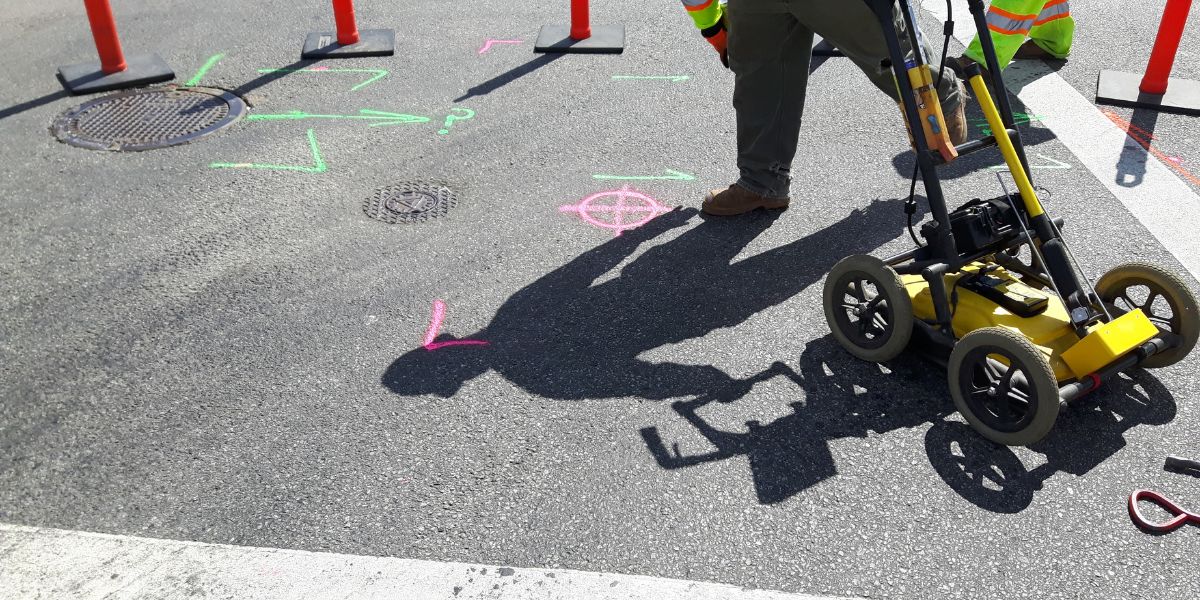
We use specialized tools such as:
Electromagnetic Locators (EML):Detect conductive utilities like electrical cables or metal pipes.
Ground Penetrating Radar (GPR):Sends radar waves into the ground to identify both metallic and non-metallic utilities like PVC pipes or fiber optics.
Radio Frequency Transmitters:Trace signal paths of buried lines.
GPS Mapping and CAD Integration:Precisely record utility locations for future reference.
Step 3: Marking and Mapping
Once detected, utilities are clearly marked on the ground surface using standardized color codes (e.g., red for electric, yellow for gas, blue for water). A digital or printed map is also created for detailed documentation.
Step 4: Verification and Reporting
We double-check the markings to ensure accuracy and provide detailed reports showing utility types, depths, and exact locations. These maps serve as valuable resources for future maintenance and construction work.
Step 5: Ongoing Support
On The Mark Locators partners with clients throughout the project to handle follow-up locates or adjustments as excavation progresses.
By following this systematic approach, we ensure no line is left undetected—keeping your project safe from start to finish.
4: Key Benefits of Private Utility Locating for Your Project
The advantages of private utility locating go far beyond safety—it’s also a strategic move for cost control, efficiency, and compliance.
Safety First
Protect your crew and community by preventing potentially deadly utility strikes. Every successful excavation starts with knowing what’s below.
Cost Savings
Avoid repair costs, penalties, and insurance claims that can quickly spiral after an unmarked utility hit. Prevention always costs less than damage recovery.
Reduced Downtime
Unplanned stoppages can derail even the most well-planned projects. Private locating ensures smoother operations with fewer disruptions.
Compliance and Legal Protection
Many jurisdictions now require proof of utility locating before excavation. Hiring a professional locator helps you meet regulatory standards and demonstrate due diligence in case of audits or claims.
Data-Driven Project Planning
Accurate underground mapping improves design efficiency and reduces change orders. It also provides a permanent digital record for future site maintenance.
Peace of Mind
With On The Mark Locators, you’re backed by certified professionals who handle every detail—so you can dig confidently knowing your site is safe.
5: Common Scenarios Where Private Utility Locating Is Essential
Private utility locating isn’t just for major construction projects—it’s essential in many everyday situations. Here are some common scenarios where hiring a professional locator is a must:
Commercial and Industrial Projects
Factories, plants, and office complexes often have internal utility networks not recorded with public utility maps. Private locating ensures you avoid damaging these lines during upgrades or expansions.
Residential Developments
Subdivisions and large estates may have private water, sewer, or electrical lines that need to be located before landscaping, pool installation, or foundation work.
Educational and Medical Campuses
Universities and hospitals often manage their own utility systems. Knowing their exact layout is vital before any construction or maintenance.
Utility Maintenance and Upgrades
Before installing new conduits, lighting systems, or fiber networks, private locating helps identify existing infrastructure to avoid cross-interference.
Government and Municipal Projects
Even public agencies rely on private locators for projects on mixed-ownership land, ensuring that both public and private lines are accounted for.
No matter the project size,private utility locating is an indispensable step in responsible site management.
6: Choosing the Right Partner — Why On The Mark Locators Stands Out
Not all locating companies are created equal. AtOn The Mark Locators, we combine technology, training, and transparency to deliver precise, reliable results that our clients trust.
Certified and Experienced Technicians
Our team is trained to interpret complex site conditions and operate advanced locating equipment with precision.
Comprehensive Detection Capabilities
We locate all types of utilities—metallic, non-metallic, and even abandoned lines—to give you a complete underground picture.
Cutting-Edge Equipment
Using GPR, EM locators, and GPS mapping ensures our results are both accurate and verifiable.
Detailed Reporting and Documentation
Every locate includes digital maps, field markings, and clear reports to support compliance, project planning, and safety audits.
Commitment to Safety and Integrity
Safety is at the core of everything we do. We follow industry standards, best practices, and local regulations to ensure maximum site protection.
When you partner with On The Mark Locators, you’re not just hiring a service—you’re gaining a trusted safety ally dedicated to protecting your people and your project.
Conclusion
In today’s construction landscape, private utility locating isn’t optional—it’s essential. Every dig, no matter how small, carries the potential to strike hidden underground systems. And while public utility marking through 811 is important, it only covers half the story.
On The Mark Locators bridges that gap by identifying the unseen—the private utilities that 811 doesn’t mark—ensuring your excavation is safe, compliant, and efficient.
By making private utility locating your first step, you’re not just avoiding problems—you’re building a foundation for safety, savings, and success.